


Keywords
Memory
Ethnic Erasure
Incarceration
Holocaust
Female Victims
Abstract
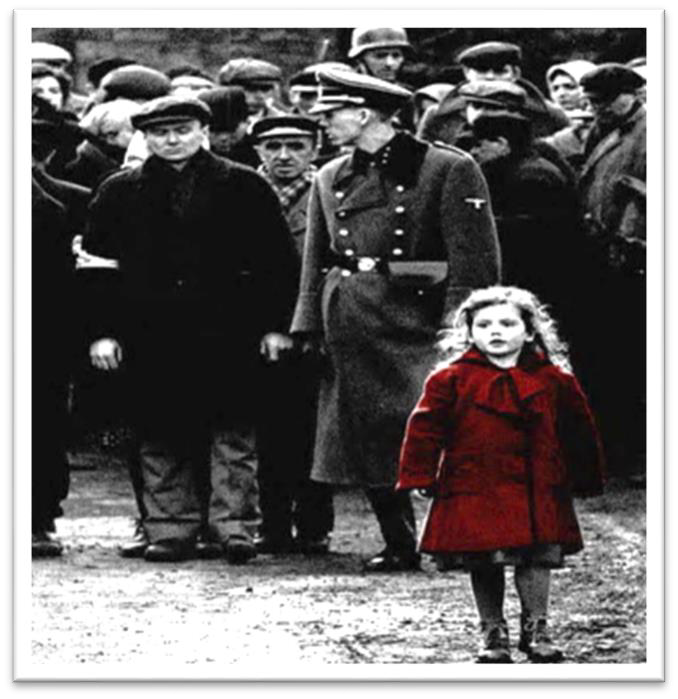
The Second World War incorporates the memories of the Holocaust and the traumatic experience of the Jewish people belonging to a particular race. Steven Spielberg’s Schindler’s List (1993) endeavours to visualize the Nazi occupation and cruelty during the Holocaust making Oskar Schindler as the centre of discussion. This film is significant for the portrayal of social issues like- the Nazi’s belief about German superiority, class difference, slavery, discrimination, marginalization, female suffering, ethnic erasure etc. But several critics comment that holocaust is not a subject to be portrayed because it hinders the recuperation process. But the horrible things which human history has witnessed must be presented to the next generation. Many have lost their loved ones; they have suffered a lot, and these horrible deeds of the past must be recollected.
References
1. Bulow, Louis (2005). “Emilie Schindler: An Unsung Heroine”. auschwitz.dk. Retrieved 11 March, 2024.
2. Foucault, Michel. Discipline and Punish: The Birth of the Prison. Trans. Alan Sheridan, Excerpt in Literary Theory: An Anthology, Ed. Julie Rivkin and Michael Ryan, Blackwell Publishers, 2000.
3. Foucault, Michel. The History of Sexuality. Trans. Alan Sheridan, Vintage Press, 1980.
4. Hass, A. In the Shadow of the Holocaust: The Second Generation, Cornell university Press, 1990.
5. Herman, J. Trauma and Recovery: From Domestic Abuse to Political Terror, Pandora, 2007.
6. Mulvey, Laura. “Pandora: Topographies of the Mask and Curiosity.” Sexuality and Space, edited by Beatriz Colomina, Princeton Architectural Press, 1992, 52.
7. Rosenberg, E. “The Schindler Jews”. https://www.schindlerjews.com/ Retrieved 12 March, 2024.
8. Schindler’s List. Directed by Steven Spielberg, Amblin Entertainment, 1994
9. Walker, J. “The Vicissitudes of Traumatic Memory and the Postmodern History Films”. Trauma and Cinema: Cross-Cultural Explorations, ed. E. Kaplan & B. Wang, Hong Kong University Press, 2004.