


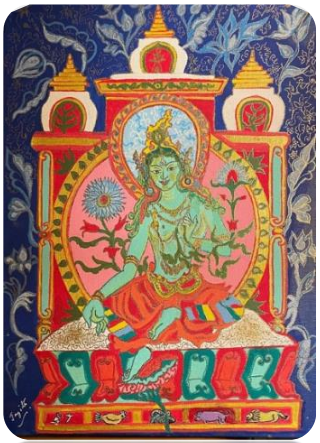
This inaugural section of the Caesurae Journal (Vol 6:2), presents a rich confluence of writings on literature, history, and the spiritual traditions of Buddhism, exploring how culture, faith, and art transcend time and space to shape the human spirit. We would continue on this theme for the forthcoming 2016 (Vol 7:1) of the Journal as well, as we hope to publish more research essays on this area.
In this issue, we feature three articles that relate to and explore Buddhist thought. Medha Sinha’s article, “In the Light of the Padas: Exploring Sexuality as a Means of Spiritual Transcendence from Caryāpadas to Vaiṣṇava Padāvalī,” investigates mystical songs of realization within Vajrayāna and Sahajiyā Buddhism and their transformation into Vaishnava devotional poetry. Tracing texts like the Caryācharyāviniścaya, Sri Kṛṣṇa Kīrtan, and Gītagovinda, she uncovers the shared symbolism of love and divine union that unites Buddhist and Hindu devotional poetics in greater Bengal and neighbouring states like Bihar, Odisha, and Assam.
The second article by Tathagata Sagar Pal’s “Understanding the ‘Wrathful Compassion’: A Reflection upon the Narratives and Forms of Yamāntaka” explores karuṇā (compassion) as the cornerstone of Mahāyāna thought. Through the figure of Yamāntaka—the wrathful form of Mañjuśrī, Pal reveals how compassion can assume fierce forms to annihilate ignorance and suffering, demonstrating that wrath and wisdom converge in the Bodhisattva’s vow to liberate all beings. Drawing from canonical sources and iconographic representations, Pal argues that Yamāntaka’s wrath embodies the protective and transformative aspect of compassion itself—destroying ignorance and inner afflictions to guide beings toward enlightenment - thereby illustrating how wrathful compassion extends the Mahāyāna ideal of universal salvation.
The issue concludes with “Transcending Power and Politics: Buddhism as a Foundation of Universal Peace and Harmony” by Godabarisha Mishra (yours truly). The essay examines Buddhist ethical and philosophical framework as a path toward universal peace. Drawing upon doctrines such as Ariya Sacca, Paṭicca-samuppāda, and Brahmavihāras, the essay argues that Buddhism offers not only an alternative to political and militaristic models of peace but also a profound vision for restoring harmony, within the self and across humanity.
We hope this issue continues to inspire our readers, reaffirming faith in compassion, reflection, and the enduring human quest for peace